
Techny Fitness presents
The 4 Pillars of Fitness Success
To get your body working for you.
Techny Fitness has created the 4 Pillars of Fitness Success for one reason: to get your body working for you.
For most people, their body is working against them.
“Techny Fitness will teach you how to change that… and get your body to start working for you.”
This is the only way to obtain long-term success and avoid fluctuations.
It takes time, but the more your body adapts to working for you, the more nutritional flexibility you’ll have.
The goal is to implement each pillar in a small way every day.
Part one/The four pillars
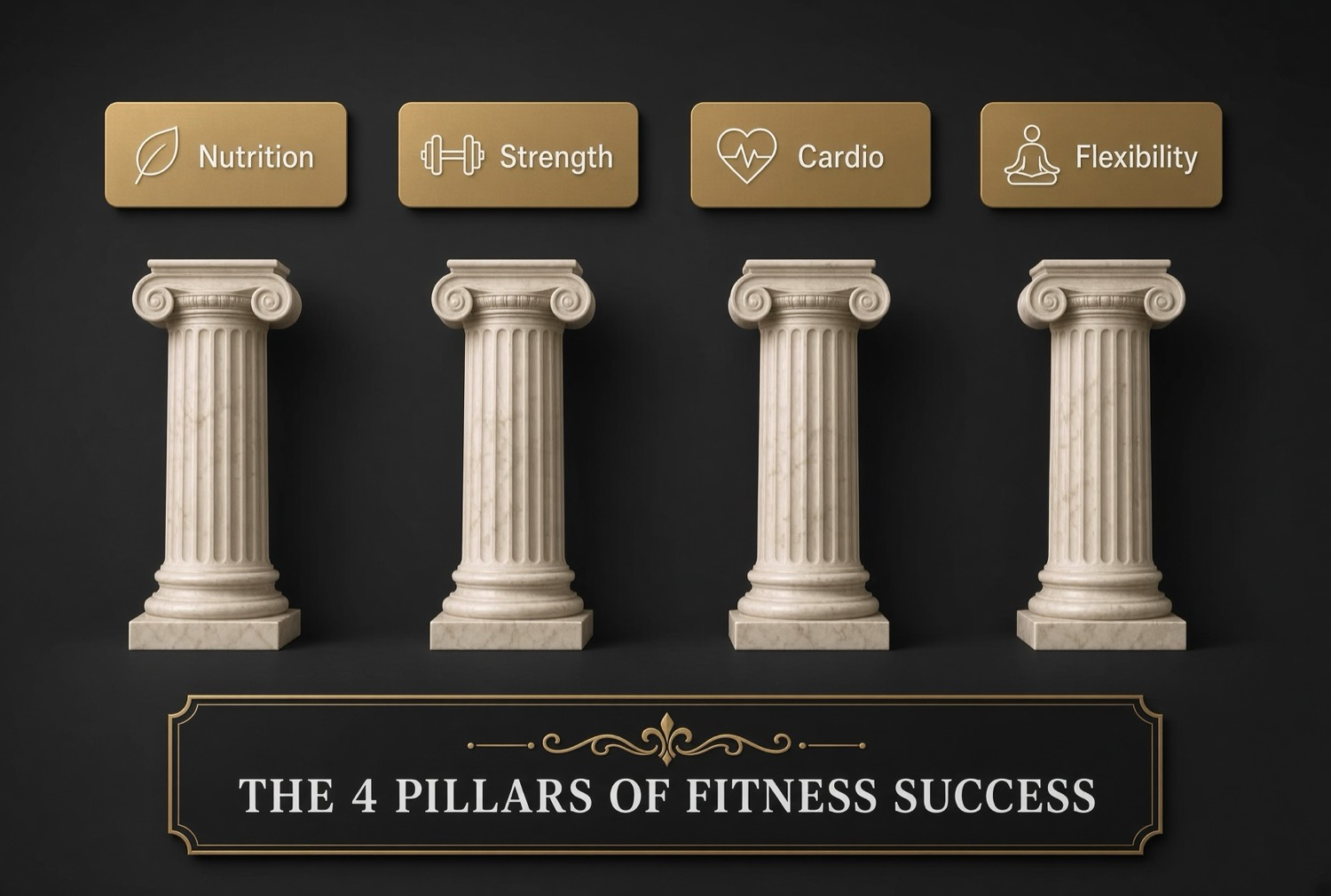
- Nutrition
- Strength
- Cardio
- Flexibility
Weekly practice/Suggested minimums
You may need to work up to these minimums. The goal is to meet them and then maintain them.
120
minutes
Strength training
90
minutes
Cardio
60
minutes
Stretching
6
days / week
Nutrition conscious
Part two/Nutrition
Your body needs three things
Proteins
Repair and build tissue. Protein keeps blood sugar balanced and keeps you fuller through the day.
About 0.7–1 gram per pound of body weight. Higher on a cut while lifting. The calculator sets the grams.
- Protein powder
- Eggs
- Greek yogurt
- Cottage cheese
- Nuts
- Chicken
- Fish
- Turkey
- Nut butter
Carbohydrates
The main purpose of carbohydrates is to provide energy. Avoid processed carbs, which can cause inflammation and damage.
Choose whole-food sources.
- Fruits
- Vegetables
- Whole grains
- Oats
- Whole grain breads
- Tortillas
Fats
Fats aid the absorption of essential nutrients. Good fats also help you feel fuller.
A necessary part of the diet — not an extra.
- Avocados
- Nuts
- Seeds
- Meat
- Cheese
- Oils
- Nut butters
Building a plate/General ratios
Consider these ranges when putting a meal together. They are guides, not a rigid prescription.
CarbohydratesEnergy
40–50%
ProteinsRepair and fullness
30–40%
FatsNutrient absorption
20–30%
The target/Keep track of calories
Major success can come from keeping track of your calories.
The calculator is the intake to follow. It uses the equations that hold up best when a lab test is not available, then adds walking, training, and the cost of digesting the meal. Eat the target it gives you, and give it about 21 days before you judge the habit.
Fat-loss target
1,760
calories a day
Maintenance is 1,950. For most people with these inputs the true number sits between 1,780 and 2,130.
About 0.4 lb down a week at this weight. Over 12 weeks that is near 5 lb down.
On the plate
- Protein
- 131g
- Fat
- 53g
- Carbs
- 190g
30% of the target
27% of the target
43% of the target
Protein is set from body size, then fat near the middle of the guide’s 20–30% range, and carbs take the rest. Hit the grams above: about 0.7–1 gram per pound, higher on a cut while lifting.
About 352 calories and 26 g protein in each of 5 meals.
At rest, before food and movement.
Net cost of your steps. Rest during those steps is already in the first line.
Lifting and cardio that steps do not already cover, plus a small afterburn.
Thermic effect of this protein, carb, and fat split.
- Body fat was not entered. Pace uses an estimate of about 23% from BMI, age, and sex. A scan or calipers will tighten it.
- The cut stops at resting burn. Eating under that is a medical decision, not a target from this guide.
How this number is built
Resting burn blends the Oxford/Henry equations (the stronger general-population fit) with Mifflin–St Jeor (the clinical standard). Walking is your stride (from height) times the net cost of level walking, so rest is not counted twice. Lifting, running, and other cardio use Compendium values the same way, plus a small after-exercise cost. Digestion follows the meal split — protein costs more to process than fat. A cut is sized with the Forbes relationship, so a leaner body gets a smaller deficit than a flat 500 calories. The 12-week line lets burn fall as weight falls, instead of treating 3,500 calories as a pound forever.
This is an estimate, not a lab test. Most people with these inputs land inside the range. Weigh in under the same conditions for two weeks. If weight is not moving the way the pace says, shift the target by about 150 calories and run it again.
Meal rhythm/A sample day
These six sittings, combined, should stay inside the daily calorie intake. Spread the limit across the schedule so meals and snacks both fit.
5:30 a.m.
Protein shake
Open the day with protein.
7:30 a.m.
Breakfast
Egg whites with ½ cup oatmeal, fruit and Greek yogurt. Or whole grain toast with nut butter.
10:30 a.m.
Mid-morning snack
Banana.
12:00 p.m.
Lunch
Grilled chicken tacos with pico and avocado.
3:00 p.m.
Afternoon snack
Apple and string cheese. Or an orange and almonds.
6:30 p.m.
Dinner
Grilled fish, chicken or shrimp, with steamed or sautéed vegetables and a side salad.
How full to feel/Satisfied and light
Try to stay around satisfied and light. That is a 4 on this scale — not starving, and not stuffed.
Satisfied
This is the mark the guide asks you to live around.
Look up a food/Calorie reference
Portions from the Techny Fitness list. Where a food varies, check the label.
Apples
Fruits
95 calories for 1 medium apple
Avocados
Fruits
250 calories for 1 average avocado
Bananas
Fruits
105 calories for 1 medium banana
Berries
Fruits
Strawberry, blueberry, and similar
Lemons
Fruits
20 calories in 1 average lemon
Limes
Fruits
20 calories in 1 average lime
Baby mixed greens
Vegetables
25 calories per serving — 1 cup
Baby spinach
Vegetables
20 calories per serving — 1 cup
Beans
Vegetables
Varies — check the label
Broccoli
Vegetables
30 calories for 1 cup
Carrots
Vegetables
1 medium carrot — 25 calories; ¾ cup baby carrots — 40 calories
Cucumbers
Vegetables
1 medium cucumber has 30 calories
Garlic
Vegetables
1 clove is 4 calories
Herbs
Vegetables
Too low to be counted — use as preferred
Onion
Vegetables
About 50 calories for 1 average onion
Peas
Vegetables
About 60 calories for ½ cup
Peppers
Vegetables
Bell — 35 calories; jalapeño — 5 calories
Tomatoes
Vegetables
About 25 calories for a medium tomato
Almonds
Nuts & Seeds
About 160 calories for ¼ cup
Flaxseeds
Nuts & Seeds
1 tbsp about 35 calories
Sesame seed
Nuts & Seeds
1 tbsp about 50 calories
Walnuts
Nuts & Seeds
About 190 calories for ¼ cup
Boneless lamb loin
Meat, Fish & Poultry
1 oz about 60 calories
Boneless, skinless chicken breast
Meat, Fish & Poultry
1 average breast about 280 calories
Roast turkey breast
Meat, Fish & Poultry
1 oz about 30 calories
Shellfish
Meat, Fish & Poultry
Shrimp, 3 oz is about 85 calories
White fish
Meat, Fish & Poultry
About 50 calories per ounce
Wild salmon
Meat, Fish & Poultry
About 45 calories per ounce
Feta cheese
Eggs & Dairy
About 75 calories per ounce
Greek yogurt
Eggs & Dairy
About 100 calories per container
Low-fat milk
Eggs & Dairy
110 calories per 8 oz
Organic eggs
Eggs & Dairy
About 70 calories per egg
Brown rice
Whole Grains
1 cup about 220 calories
Flax bread
Whole Grains
About 100 calories per slice
Quinoa
Whole Grains
About 55 calories per ¼ cup
Rolled oats
Whole Grains
150 calories per ½ cup
Whole rye
Whole Grains
65 calories per slice
Almond butter
Other
98 calories per tbsp
Cashew butter
Other
94 calories per tbsp
Extra-virgin olive oil
Other
About 120 calories per tbsp
Coffee
Drinks
A preferred drink
Green tea
Drinks
A preferred drink
Water
Drinks
A preferred drink
Pro tip/Lower the sodium
- Lower your sodium intake.
- This reduces the chance of serious health risks.
- You’ll also see less water retention, and a more natural, slimmer appearance.